Pharmaceutical Laboratory
Turnkey Cleanroom Solutions for Pharmaceutical Manufacturing & Research Laboratories
In the pharmaceutical sector, the margin for error is zero. Whether you are operating an R&D lab, a sterile filling line, or a quality control department, the integrity of your environment dictates the safety and efficacy of the final product. Rayshen provides world-class cleanroom infrastructure designed to meet the rigorous demands of WHO-GMP, USFDA, and ISO 14644 standards.
Compliance-Driven Infrastructure for the Pharmaceutical Industry
Pharmaceutical facilities require more than just standard equipment; they require validated systems that can withstand 24/7 industrial rigors while maintaining strict atmospheric controls. Our engineering approach focuses on the "Four Pillars of Pharma Hygiene": Filtration, Pressure, Surface Integrity, and Personnel Flow.
ISO 14644 & GMP Standard Cleanroom Design
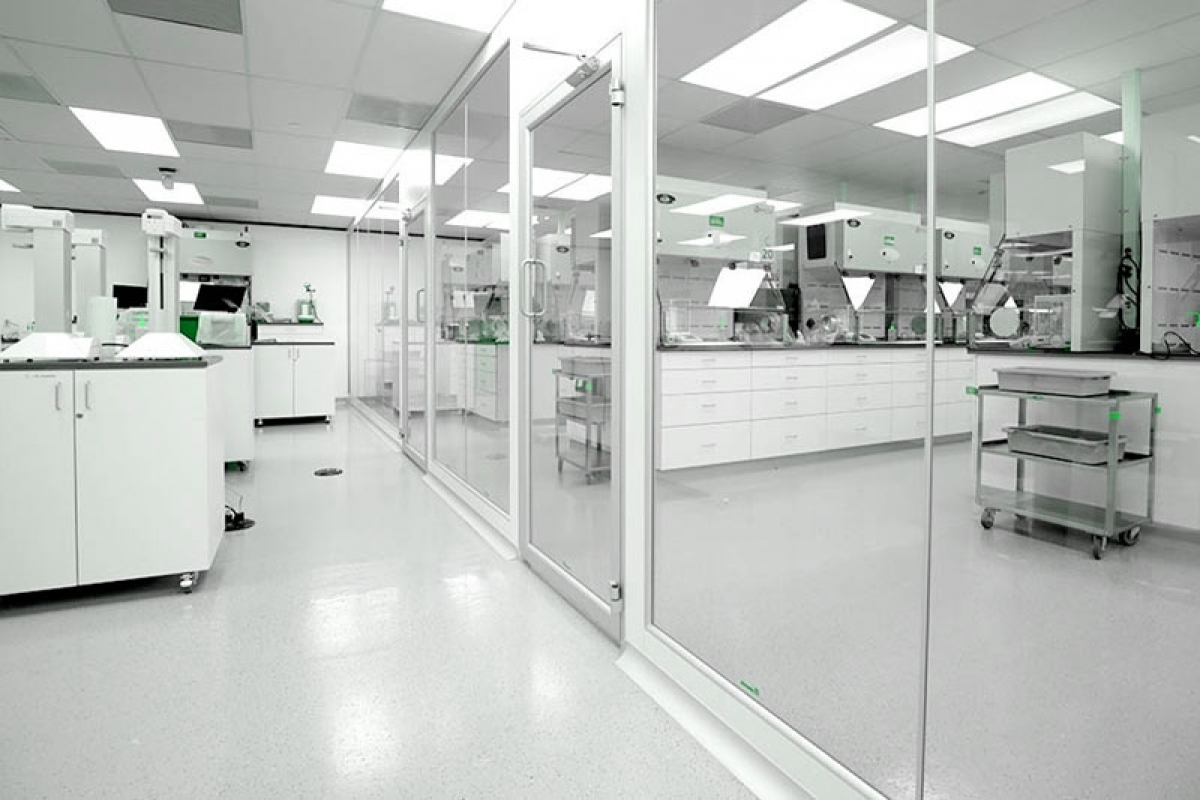
Every pharmaceutical laboratory we outfit is designed with the specific Cleanroom Class (ISO 5 to ISO 8) in mind. We provide high-efficiency HVAC integration and modular wall panels that ensure a non-porous, airtight environment.
Atmospheric Control Mechanisms
Positive Pressure Maintenance: Ensuring that contaminants from "dirty" zones never migrate into sterile production areas.
Laminar Airflow Solutions: Providing unidirectional airflow to protect critical open-product zones.
Essential Equipment for Sterile Laboratory Entry
High-Velocity Cleanroom Air Showers
Personnel are the largest source of contamination. Our SS 304 Air Shower is a mechanical gatekeeper that uses high-velocity HEPA-filtered air to scrub garments before lab entry.
Advanced Decontamination Technology
Nozzle Velocity: Air speeds of 22-25 m/s ensure complete particulate removal.
Automated Protocols: Utilizing Voice-Prompt Air Showers to guide staff through mandatory 360-degree rotation cycles.
Hygienic Laboratory Workstations & Furniture
In a pharmaceutical lab, the surface is as important as the air. All Rayshen furniture is manufactured from Medical Grade SS 304 or SS 316L, ensuring zero microbial adhesion and high chemical resistance.
SS Sinks & Scrub Stations
Hand hygiene is the foundation of sterile technique. We provide customized SS Surgical Scrub Sinks with sensor-based faucets to ensure a touchless, aseptic experience.
Engineering Features for Pharma-Grade Sinks
Coved Corner Design
All internal junctions are rounded to prevent biofilm and dirt accumulation in corners.
Seamless TIG Welding
Ensures a smooth, burr-free finish that stands up to aggressive chemical disinfection.
Custom Engineering for Specialized Lab Environments
Quality Control (QC) & Microbiology Labs
Microbiology labs require specialized containment. We provide Biosafety Cabinets and Laminar Airflow Benches that protect both the operator and the sample.
Storage & Material Handling
Static and Dynamic Pass Boxes: Allowing for the transfer of samples without breaking the air-lock.
SS Laboratory Cabinets: Designed for high load capacities and resistance to aggressive reagents.
Why Rayshen is the Trusted Partner for Pharma Cleanrooms?
As a leading Cleanroom Equipment Manufacturer in India, Rayshen combines decades of technical expertise with a commitment to validation and audit-readiness.
Validation and Documentation Support
We provide comprehensive IQ, OQ, and PQ documentation to assist in your regulatory audits (USFDA/MHRA/WHO).
Post-Installation Services
Annual Maintenance (AMC): Ensuring sensors and blowers function at peak performance.
Filter Integrity Testing: On-site DOP/PAO testing to maintain ISO compliance.
Conclusion: Elevating Pharmaceutical Safety with Rayshen
The future of pharmaceutical manufacturing lies in superior contamination control. By choosing Rayshen’s pharmaceutical laboratory solutions, you are investing in a sterile perimeter that protects your research and your reputation.
Ready to discuss your project?
If you need a detailed BOQ (Bill of Quantities) for a new lab setup or a quote for an ISO 5 Air Shower, please contact our engineering team. We provide custom CAD layouts to optimize your available floor space.