H14: The Ultimate Guide to High-Efficiency HEPA Filtration in Modern Cleanrooms
16-02-2026
In industries where even microscopic contamination can lead to massive losses, h14 filtration has become the gold standard for air purity. From pharmaceutical manufacturing to microelectronics and biotechnology, the demand for ultra-clean environments continues to rise. At the heart of these environments lies one critical component: the H14 HEPA filter. Known for its exceptional filtration capability, h14 plays a decisive role in ensuring safety, compliance, and product integrity.
This article explores everything you need to know about h14, including how it works, its efficiency, how it compares to H13, and why brands like Rayshen are trusted worldwide for high-performance cleanroom solutions.
What Is H14 and Why Is It Important?
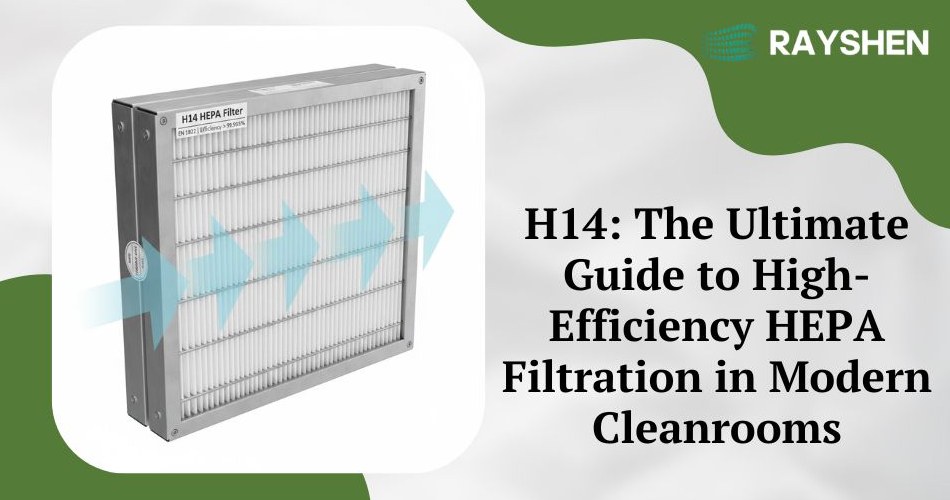
H14 refers to a classification under the European EN 1822 standard for HEPA filters. These filters are designed to capture extremely fine particles from the air, including bacteria, viruses, spores, and microscopic dust.
An h14 hepa filter is capable of removing 99.995% of particles as small as 0.3 microns, making it one of the most efficient filtration technologies available today.
In real-world applications, hepa h14 filters are commonly used in:
- Pharmaceutical cleanrooms
- Semiconductor fabrication units
- Medical research laboratories
- Hospital isolation wards
- Vaccine and biotech manufacturing
Without h14, many of these controlled environments would fail to meet international contamination standards.
Understanding H14 HEPA Filter Efficiency
How Efficient Is H14?
When we talk about hepa filter h14 efficiency, we are referring to its ability to remove airborne particles with near-perfect accuracy.
- H14 filter efficiency: 99.995%
- Particle size tested: 0.3 microns
- Penetration rate: only 0.005%
This means that out of 100,000 particles, only 5 might pass through an h14 filter.
In critical industries, even this tiny margin is acceptable only because it represents the absolute limit of modern filtration technology.
H13 vs H14: What’s the Difference?
One of the most common comparisons in air filtration is hepa filter h13 vs h14.
| Feature | H13 | H14 |
|---|---|---|
| Efficiency | 99.95% | 99.995% |
| Particle penetration | 0.05% | 0.005% |
| Typical use | General cleanrooms | Ultra-critical environments |
| Cost | Lower | Higher |
| Risk tolerance | Medium | Extremely low |
While the difference in numbers looks small, in high-risk environments, that extra layer of protection offered by hepa filter h14 can prevent serious contamination events.
Why Industries Choose H14 HEPA Filters
1. Maximum Safety
An h14 hepa filter efficiency level ensures that even the smallest airborne threats are eliminated.
2. Regulatory Compliance
Many global standards, including GMP and ISO 14644, require hepa 14 filter systems in sensitive manufacturing.
3. Product Integrity
In industries like pharmaceuticals and electronics, microscopic contamination can ruin entire production batches.
4. Long-Term Reliability
High-quality h14 filter systems from brands like Rayshen are built for durability, consistent airflow, and minimal leakage.
Where H14 Fits in a Complete Cleanroom Setup
An h14 filter is never used alone. It functions as part of an integrated contamination control system.
Here is how it connects with essential cleanroom components:
- hepa filter: The core air purification unit.
- ffu: Fan-powered systems that distribute filtered air evenly.
- fan filter unit: Combines HEPA filtration and airflow control.
- air shower: Removes surface contaminants from personnel before entry.
- ss sink: Maintains hygiene during handwashing.
- clean room: The controlled environment where filtration is applied.
- clean room equipment: Includes benches, pass boxes, cabinets, and airflow systems.
Brands like Rayshen design these systems so that h14 filters work seamlessly with every component.
How H14 HEPA Filters Work
The working principle of hepa h14 is based on three physical mechanisms:
1. Interception
Particles following airflow lines collide with filter fibers and get trapped.
2. Impaction
Heavier particles crash directly into fibers due to inertia.
3. Diffusion
Ultrafine particles move randomly and eventually stick to fibers.
Together, these mechanisms allow an h14 hepa filter to trap particles far smaller than what the human eye can detect.
Applications of H14 HEPA Filters
Pharmaceutical ManufacturingEnsures sterile production areas and contamination-free drug formulation.
Semiconductor IndustryPrevents micro-particle interference during chip fabrication.
Biotechnology LabsProtects sensitive cell cultures and biological samples.
Hospitals and HealthcareUsed in ICUs, operating theaters, and isolation wards.
Aerospace and DefenseMaintains ultra-clean environments for precision engineering.
In all these sectors, h14 filter efficiency is not a luxury, it’s a necessity.
Why Rayshen Is a Trusted Name in H14 Solutions
Rayshen has built a reputation for delivering reliable, high-performance h14 filtration systems across multiple industries.
Key advantages of Rayshen:
- Certified hepa filter h14 efficiency
- Precision-engineered airflow systems
- Leak-tested filter frames
- Long service life
- Customizable cleanroom integration
Whether you need standalone h14 filter units or complete clean room equipment solutions, Rayshen ensures compliance with global standards.
Common Myths About H14 HEPA Filters
Myth 1: H14 Is Only Slightly Better Than H13
In reality, that extra 0.045% efficiency can be the difference between sterile success and total contamination.
Myth 2: H14 Filters Reduce Airflow
High-quality hepa 14 filter designs maintain optimal airflow without pressure loss.
Myth 3: H14 Is Only for Hospitals
While healthcare uses it heavily, industries like electronics and aerospace rely on h14 just as much.
Maintenance and Replacement of H14 Filters
To maintain peak h14 hepa filter efficiency, proper maintenance is essential.
Best Practices:
- Monitor pressure drop regularly
- Replace filters based on usage, not just time
- Perform leak testing annually
- Use compatible fan filter unit systems
- Avoid cleaning or washing HEPA media
A poorly maintained h14 filter can lose efficiency and compromise the entire clean room.
Cost vs Value of H14 Filters
Although h14 filters cost more than lower-grade HEPA filters, the long-term value is unmatched.
You save money by:
- Reducing contamination risks
- Preventing batch failures
- Meeting regulatory requirements
- Protecting employee health
When you factor in these benefits, hepa filter h14 becomes a smart investment rather than an expense.
The Future of H14 Filtration Technology
As industries move toward nanotechnology and advanced biotech, h14 filtration will continue evolving.
Future trends include:
- Smart monitoring sensors
- Lower energy consumption
- Longer filter lifespan
- AI-based airflow optimization
Companies like Rayshen are already developing next-generation hepa h14 systems to meet future demands.
Final Thoughts
In today’s high-risk industrial environments, h14 filtration is not optional, it is essential. With unmatched efficiency, proven reliability, and global acceptance, hepa filter h14 systems represent the pinnacle of air purification technology.
When combined with integrated systems like ffu, air shower, and fan filter unit, and supported by trusted brands like Rayshen, h14 ensures that your cleanroom remains safe, compliant, and future-ready.
FAQs About H14 HEPA Filters
What is H14 in HEPA filters?
H14 is a classification that represents the highest efficiency level under the EN 1822 standard.
What is the efficiency of H14 filters?
H14 filter efficiency is 99.995% at 0.3 microns
Is H14 better than H13?
Yes. The hepa filter h13 vs h14 comparison shows that H14 offers significantly better particle retention.
Where are H14 filters used?
They are used in pharmaceuticals, hospitals, biotech labs, semiconductor plants, and aerospace facilities
How often should H14 filters be replaced?
Typically every 2–5 years, depending on usage and environmental conditions.
Can H14 filters be cleaned?
No. HEPA media should never be washed or reused.
Explore Other Related Blogs
- What Is a HEPA Filter? Types, Uses & High Efficiency Particulate Air Guide
- What Is HEPA? A Complete Guide to Meaning, Full Form, Types, Sizes, and Uses
- Clean Room Equipment: The Detailed Guide for Modern Controlled Environments
- H13 HEPA Filters: The Backbone of Reliable Contamination Control in Modern Cleanrooms
- Air Shower Systems: Advanced Contamination Control for Modern Clean Room Environments
- Ultimate Guide to SS Sink: Sizes, Types, Uses & Cleaning Tips for Commercial Applications
- What Is a Clean Room? A Complete Beginner’s Guide for Modern Industries
.png)
.png)