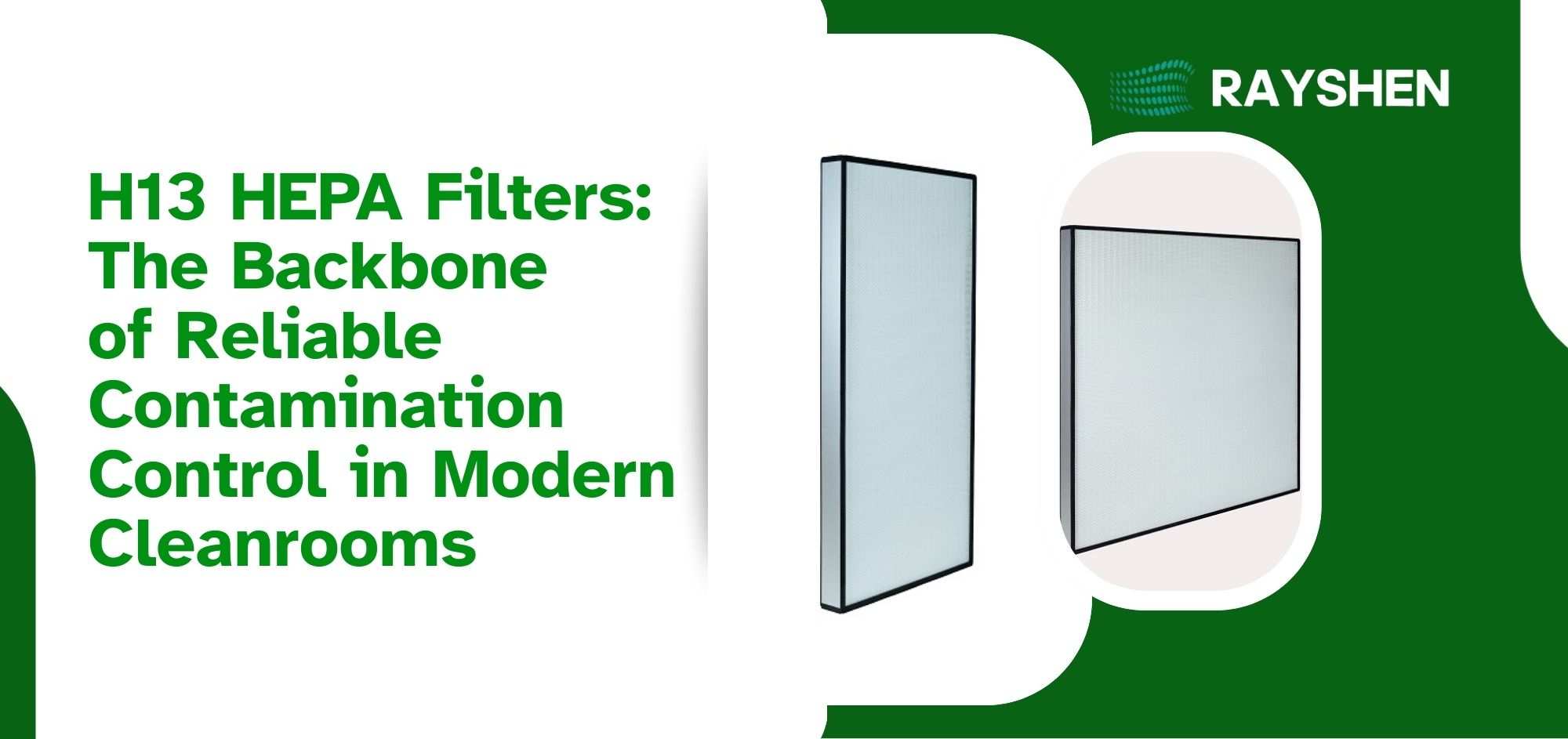
H13 HEPA Filters: The Backbone of Reliable Contamination Control in Modern Cleanrooms
23-02-2026
In industries where even the tiniest airborne particle can compromise product safety, the role of advanced air filtration becomes critical. One of the most widely trusted filtration standards today is h13, known for its exceptional ability to remove microscopic contaminants from controlled environments. Whether you're managing a pharmaceutical facility, electronics manufacturing unit, or biotechnology lab, integrating the right h13 hepa filter can significantly improve air purity and compliance with international cleanroom standards.
At Rayshen, cleanroom solutions are engineered to meet stringent industrial demands, and the implementation of h13 filtration systems plays a central role in achieving contamination-free environments across various sectors.
What is H13 HEPA Filter?
Before choosing the right air filtration system, it's important to understand what is h13 hepa filter and why it’s widely used in controlled environments.
An h13 grade HEPA filter is designed to capture at least 99.95% of airborne particles that are 0.3 microns in diameter. This includes dust, bacteria, pollen, mold spores, and other microscopic pollutants that can negatively affect sensitive manufacturing processes.
Compared to standard filters, the hepa h13 classification offers superior performance and reliability. It ensures that your clean room environment maintains the required air cleanliness levels for ISO certification and regulatory compliance.
H13 HEPA Filter Efficiency in Controlled Environments
When evaluating filtration systems, h13 hepa filter efficiency becomes a key deciding factor. These filters are specifically engineered to trap particles that are otherwise invisible to the human eye but potentially harmful to sterile production processes.
Industries that rely on sterile environments often integrate hepa filter h13 technology into:
By incorporating filter h13 solutions into these systems, facilities can ensure optimal airflow, reduced contamination risk, and better environmental control.
At Rayshen, our modular clean room setups are equipped with high-performance h13 filters to meet both ISO and GMP standards across industries like pharmaceuticals, medical devices, and semiconductor manufacturing.
H13 Filter Applications Across Industries
The versatility of the h13 filter makes it suitable for a wide range of applications, especially in industries where contamination control is a top priority.
Pharmaceutical Manufacturing
Maintaining sterile production zones is crucial for drug safety. Rayshen integrates hepa h13 filtration into laminar airflow units and processing areas to maintain the highest levels of hygiene.
Electronics & Semiconductor Industry
Dust particles can damage sensitive circuits and microchips. Using h13 filtration in systems helps prevent airborne contamination during production.
Biotechnology Labs
In lab environments where research integrity matters, hepa filter h13 systems are used to maintain consistent air quality in testing chambers and laboratory enclosures.
Food Processing Units
Airborne microorganisms can impact product quality. Installing filter h13 solutions within entry systems minimizes external contamination risks.
H13 HEPA Filter vs H14: Understanding the Difference
One of the most common questions in air filtration is the comparison of hepa filter h13 vs h14.
| Feature | H13 | H14 |
|---|---|---|
| Filtration Efficiency | 99.95% | 99.995% |
| Particle Size Filtered | 0.3 microns | 0.3 microns |
| Airflow Resistance | Lower | Higher |
| Energy Consumption | Moderate | Higher |
| Cost | Cost-effective | Expensive |
While H14 filters provide slightly better filtration, h13 is often preferred for most commercial clean room applications due to its balance of performance, airflow efficiency, and cost-effectiveness.
Rayshen recommends h13 grade filters for general pharmaceutical and industrial environments where ultra-high filtration is not mandatory but reliability is essential.
Integrating H13 Filters in Cleanroom Equipment
Proper integration of h13 filters into your infrastructure enhances the performance of multiple contamination control systems.
By embedding hepa h13 technology into these units, Rayshen ensures consistent laminar airflow and minimized particle count inside your clean room.
For instance:
- Fan Filter Units with h13 filter improve air circulation.
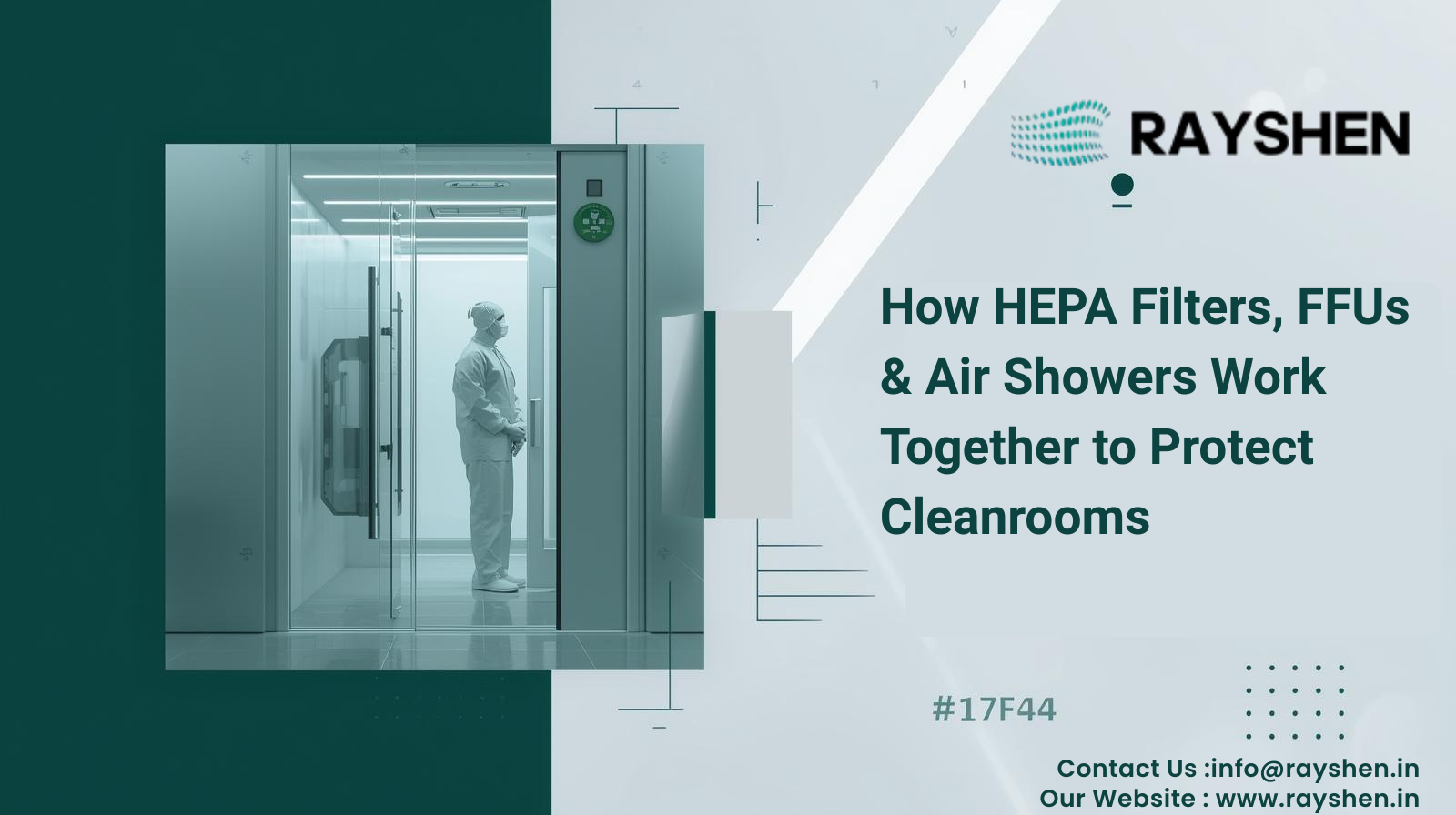
- Air Shower Systems equipped with hepa filter h13 prevent entry of contaminants.
- Stainless units combined with filtered airflow help maintain hygiene compliance in pharmaceutical facilities.
Why Choose Rayshen H13 HEPA Filters?
Choosing the right partner for your filtration needs is just as important as selecting the right filter. Rayshen provides:
- Certified h13 HEPA filtration systems
- Custom-designed clean room equipment
- Integrated fan filter unit technology
- Reliable hepa filter performance
- Long service life and easy maintenance
Our commitment to quality ensures that every h13 hepa filter meets international contamination control requirements and enhances the performance of your cleanroom environment.
Conclusion
In controlled environments where air purity directly impacts product quality, safety, and compliance, choosing the right filtration standard is non-negotiable. The h13 classification offers an ideal balance between high filtration efficiency, energy performance, and cost-effectiveness. With a removal efficiency of 99.95% at 0.3 microns, an h13 hepa filter provides reliable protection against airborne contaminants in pharmaceutical plants, electronics manufacturing units, biotechnology labs, and other critical industries.
Understanding what is h13 hepa filter and how it compares in the hepa filter h13 vs h14 debate allows facility managers to make informed decisions based on operational requirements. While H14 may be necessary for ultra-critical zones, hepa h13 remains the preferred choice for most ISO-classified cleanrooms due to its strong performance and optimized airflow characteristics.
When integrated into systems like fan filter unit, ffu, and air shower, the h13 filter becomes a powerful component of a complete contamination control strategy. Combined with high-quality clean room equipment such as stainless ss sink units and modular clean room designs, it ensures a hygienic and regulation-compliant environment.
At Rayshen, every filter h13 solution is engineered to meet industry standards while delivering long-term durability and consistent air purity. By choosing Rayshen, you’re not just investing in a hepa filter, you’re investing in precision, performance, and peace of mind for your controlled environment.
FAQs
What is H13 HEPA filter used for?
An h13 hepa filter is used in environments where high-efficiency air purification is required, such as pharmaceutical manufacturing units, hospitals, and electronics industries.
What is the efficiency of H13 HEPA filters?
The h13 hepa filter efficiency is approximately 99.95% for particles sized 0.3 microns.
What is the difference between H13 and H14 filters?
When comparing hepa filter h13 vs h14, H14 filters offer slightly higher efficiency, but h13 filters are more energy-efficient and cost-effective for most applications.
Can H13 filters be used in cleanroom FFUs?
Yes, h13 filter systems are commonly integrated into ffu and fan filter unit setups to maintain air cleanliness.
Is H13 HEPA suitable for pharmaceutical cleanrooms?
Absolutely. hepa h13 filters are widely used in pharmaceutical clean room environments to control airborne contamination.
Explore Other Related Blogs
- What Is a HEPA Filter? Types, Uses & High Efficiency Particulate Air Guide
- What Is HEPA? A Complete Guide to Meaning, Full Form, Types, Sizes, and Uses
- Clean Room Equipment: The Detailed Guide for Modern Controlled Environments
- H14: The Ultimate Guide to High-Efficiency HEPA Filtration in Modern Cleanrooms
- Air Shower Systems: Advanced Contamination Control for Modern Clean Room Environments
- Ultimate Guide to SS Sink: Sizes, Types, Uses & Cleaning Tips for Commercial Applications
- What Is a Clean Room? A Complete Beginner’s Guide for Modern Industries
.png)
.png)