Where to Install a Static Pass Box in a Pharma Cleanroom
11-11-2026
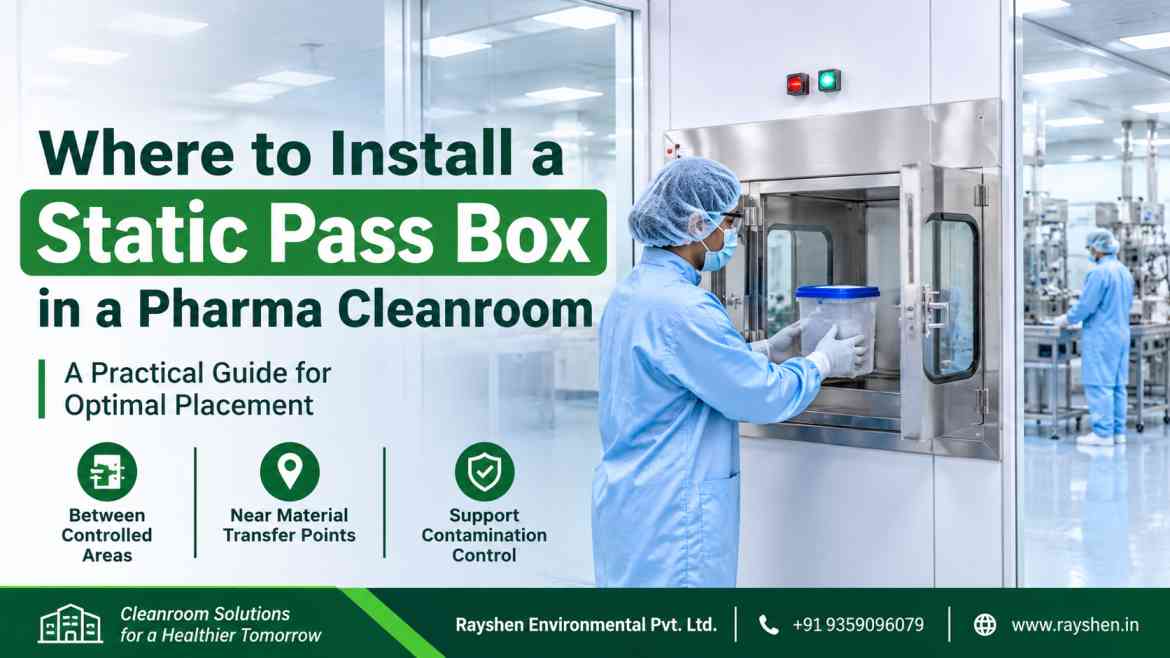
In a pharmaceutical plant, every time a door opens between two zones, you take a risk. Materials still have to move: raw materials in, intermediates between rooms, finished goods out, samples to QC. A static pass box is the simplest way to move them without letting people and dirty air cross the boundary.
But the pass box only works if it is in the right place. A well-chosen unit protects your classification. A badly placed one becomes a bottleneck or a contamination path. This guide shows exactly where to install a static pass box in a pharma cleanroom, where not to, and how to get the details right. It is written by the engineering team at Rayshen Environmental, a pass box manufacturer in India that supplies cleanroom projects across pharma, biotech and electronics.
What Is a Static Pass Box and What Does It Do?
A static pass box is a double-door transfer chamber built into a cleanroom partition. It lets you pass materials from one zone to another without a person entering. The two doors are interlocked, so only one can be opened at a time. This keeps the barrier between the zones intact and protects against cross-contamination.
"Static" means the chamber has no fan or filter of its own. It relies on door interlock, smooth sealed construction and, optionally, a UV lamp. It works as a physical airlock for material transfer, which is why it is also called a material transfer chamber.
The layout decision matters because a pass box is a permanent hole in your cleanroom partition. Once it is installed, you cannot move it without rework.
The Golden Rule of Pass Box Placement
Install a pass box wherever materials must cross a boundary between two areas of different cleanliness, pressure or function, and where you want to keep people out of the transfer.
In practice that means three questions for every planned location:
What is on each side? Check the ISO class or GMP grade of both rooms.
Which way does material flow? Place the box along the one-way flow of your process, not against it.
Who will use it, and how often? High-traffic points need space around the box, and a well-lit approach.
Static vs Dynamic: Which Goes Where?
The type of pass box depends on the cleanliness gap between the two zones.
Static pass box: use between zones of the same ISO class, or between adjacent classes with a small difference, where the transferred items are already cleaned or sealed.
Dynamic pass box: use when moving items into a notably cleaner zone, such as into a Grade B or ISO 5 supply area. A built-in HEPA fan unit cleans the chamber air.
A common mistake is to use a static unit where the cleanliness gap is large. When in doubt, ask your validation team and your supplier to review the specific transfer.
Best Locations to Install a Static Pass Box
Here are the six locations where a static pass box delivers the most value in a typical pharma facility.
1. Between the Corridor and a Process Room
This is the most common location. Materials arrive in the corridor and pass into the process room through the box, without staff crossing the barrier. It keeps the corridor and the room from sharing air and reduces movement through the gowning area.
2. Between Rooms of the Same ISO Class
Moving a tray from one ISO 8 room to the next ISO 8 room, such as from granulation to compression, is an ideal use. Both sides share the same classification, so a static unit is enough, and staff stay in their own rooms.
3. Between Warehouse or Dispensing and the Cleanroom
Raw materials usually arrive from a lower-class warehouse or sampling booth. A pass box in the partition lets you pass sanitised, double-bagged or wiped containers into the dispensing room. Place the box close to the dispensing station to reduce handling distance. For larger or higher-risk transfers, a dynamic unit or a material airlock may be a better fit.
4. Between Packing and Final Staging Areas
Primary packing and secondary packing often sit in zones of different classes. A pass box between them lets the finished product move on while the packing hall remains separated from general areas.
5. Between QC Lab and Production Areas
Samples from production to the QC microbiology or chemistry lab, and reference materials back to the plant, can pass through a dedicated box. This avoids staff carrying samples across zones, which cuts the risk of introducing contamination and mix-ups.
6. Waste and Return Transfer Points
Separate pass boxes for waste, rejects and returns help maintain one-way flow. Installing a dedicated box for outgoing waste, distinct from incoming materials, prevents clean and dirty items from sharing the same chamber.
Where NOT to Install a Static Pass Box
Avoid these locations:
Directly into a Grade A or ISO 5 critical zone where a static unit is not adequate. Use a dynamic pass box or an engineered transfer solution instead.
Across a large cleanliness gap (for example, uncontrolled area straight into an ISO 7 room) without a defined sanitisation step.
Opposite another pass box or door in a way that lets two doors line up and create a straight air path.
Next to a return air grille or supply diffuser where airflow can disturb the chamber or the room's pressure pattern.
In a narrow corridor with no staging space, where trolleys will block the way.
On a wall that is hard to seal, such as thin, non-rigid or poorly supported partitions.
Where it breaks the one-way flow of materials, personnel or waste.
Installation Details That Matter
The right wall is only the start. These details decide whether the pass box performs.
[H3] Mounting Height and Clearance
Mount the box at a comfortable working height, typically with the chamber floor around 900 mm to 1,000 mm above the finished floor level, so operators can load and unload without bending. Leave clear floor space on both sides for a trolley or a staging table. Confirm the figures against your own ergonomic and layout requirements.
Fitting Into the Cleanroom Partition
The box is built into the cleanroom partition and must match the wall thickness. Plan the cut-out and framing before the panels go up, because modifying a finished cleanroom partition is slow and risks breaking the seal. Share the pass box drawing with the partition contractor during the design stage.
Sealing and Flush Finishing
Seal the gap between the pass box flange and the wall with a suitable cleanroom-grade sealant, and finish the joint flush and smooth. Any crevice or open joint can trap dust and microbes, and may create a leak path that disturbs pressure differentials between rooms.
Choosing the Right Static Pass Box
Placement is half the decision. The specification is the other half.
SS 304 vs SS 316
SS 304 stainless steel is the usual choice for general pharma use because it is durable, smooth and easy to clean. SS 316 has added corrosion resistance and is preferred where harsh disinfectants, chlorides or aggressive cleaning agents are used often. Choose according to your cleaning and sanitisation SOP, and ask for material test certificates.
Mechanical Interlock vs Electronic Interlock
A mechanical interlock uses physical latches or linkages so that only one door can open at a time. It needs no power, is simple and reliable, and is widely used. An electronic interlock uses electromagnetic locks and controls, and can add indicator lights, door status display, timers or alarms. It suits facilities that want clear visual status or integration with a building system. Both achieve the same basic goal; choose based on your control philosophy and budget.
Pass Box With UV Light: When Is It Needed?
A pass box with UV light adds a germicidal lamp inside the chamber, usually on a timer, to help reduce microbial load on exposed surfaces during transfer. UV only treats surfaces it directly reaches, and shadowed areas are not covered. It is a helpful supplement, not a replacement for cleaning, disinfection or proper packaging of materials. Specify UV for transfers where surface bioburden is a concern, and check the interlock so the lamp cannot be on when a door is opened.
Sizing the Chamber
Size the chamber for your largest regular item, plus handling space. A chamber that is too small leads to forced loading and damaged goods, while an oversized one wastes wall space and is harder to clean. Take a sample tray, bin or container to the design meeting and measure it.
Browse our static and dynamic pass boxes to compare sizes and options.
Step-by-Step: How to Plan Pass Box Locations
Get the approved layout. Start from the final room-by-room layout with ISO classes or GMP grades marked.
Draw the flows. Overlay material, personnel and waste flows on the plan.
Mark every boundary crossing for materials. Each point where materials move between zones is a candidate.
Assign the type. Choose static for same-class or low-gap transfers, dynamic where moving into a higher grade.
Check each site. Confirm wall support, airflow, space for trolleys and distance from other doors.
Fix the specification. Decide material (SS 304/316), interlock type, UV option and size.
Share drawings early. Give the pass box dimensions to the partition and civil contractors before panels are made.
Plan validation. Include the pass boxes in your IQ/OQ documentation and cleaning SOPs.
Common Installation Mistakes
Placing a static unit across too large a cleanliness gap
Fixing the position after the partition is built
Forgetting trolley and staging space
Using one box for both incoming and outgoing flow
Leaving open joints around the flange
Choosing the wrong stainless grade for the disinfectant used
Skipping interlock checks after installation
Ignoring cleaning access inside the chamber
Pass Box Cleaning and GMP Documentation
A pass box that is installed well but cleaned poorly is still a contamination risk. Build these into your routine:
A written cleaning and disinfection SOP with approved agents and contact times
Cleaning before and after each shift or batch, as defined by your SOP
Interlock function checks on a schedule
UV lamp hours logged and lamps replaced on time
Records filed for GMP audits, including drawings, material certificates and test results
Why Buyers Choose Rayshen Environmental
Rayshen Environmental Private Limited manufactures pass boxes, HEPA filters, fan filter units, air showers, laminar airflow units, biosafety cabinets, cleanroom panels and modular cleanroom systems at our facility in Greater Noida. We serve pharmaceutical manufacturers, biotech firms, HVAC consultants, cleanroom contractors, EPC companies, solar and medical device producers and semiconductor facilities across India.
Direct manufacturer: transparent pricing and direct engineering access.
Custom sizes: pass boxes built to your wall thickness and chamber size.
Material and interlock options: SS 304 or SS 316, mechanical or electronic interlock, and optional UV light.
Documentation support: drawings and material certificates for your audit file.
Want help placing pass boxes on your layout? Contact Rayshen Environmental and share your plan for a free review.
Frequently Asked Questions
Q1. Where should a static pass box be installed in a pharma plant?
Install it at any point where materials cross between two zones, such as corridor to process room, between rooms of the same ISO class, from dispensing to production, or from production to QC. Keep it on the one-way material flow path.
Q2. Can a static pass box be used for an ISO 5 area?
Usually not on its own. Transfers into Grade A or ISO 5 zones typically need a dynamic pass box or an engineered transfer system, along with proper sanitisation. Follow your contamination control strategy.
Q3. What is the difference between a static and a dynamic pass box?
A static pass box has interlocked doors but no fan or filter. A dynamic pass box adds a fan and HEPA filter to clean the air inside the chamber, which suits transfers into cleaner zones.
Q4. At what height should a pass box be mounted?
Typically with the chamber floor about 900 mm to 1,000 mm above the finished floor for comfortable loading. Adjust based on your operators, trolleys and layout.
Q5. Do I need a UV light in my pass box?
Not always. UV is useful as a supplementary surface treatment, but it does not replace cleaning or disinfection. Decide based on your risk assessment and SOPs.
Conclusion
The best place for a static pass box is wherever materials must cross a zone boundary without people following them, along a clear one-way flow, between zones whose cleanliness gap a static unit can safely handle. Get the location, type and specification right at the design stage, seal and clean it properly, and it becomes one of the simplest and most effective contamination control tools in your plant.
Planning a new cleanroom or an upgrade? Talk to Rayshen Environmental, your pass box manufacturer in India, for drawings, sizing and a quote.
Explore Other Related Blogs
- Static vs Dynamic Pass Box: Which One Does Your Cleanroom Need?
- Air Shower vs. Pass Box: What's the Difference and When Do You Need Each?
- Clean Room Equipment: A Complete Buyer's Guide to Building a Compliant Controlled Environment
- Clean Room Equipment 101: HEPA Filters, FFUs, Air Showers, and More
.png)
.png)