ISO 14644 Compliance: Why H14 HEPA Filters are the Gold Standard for Indian Pharma Units
03-04-2026
In the highly regulated landscape of the Indian pharmaceutical industry—often referred to as the "Pharmacy of the World"—maintaining ultra-clean environments is not just a operational preference; it is a legal mandate. As regulatory bodies like the USFDA, MHRA, and WHO tighten their grip on Good Manufacturing Practices (GMP), the role of air filtration has moved to the forefront of facility design.
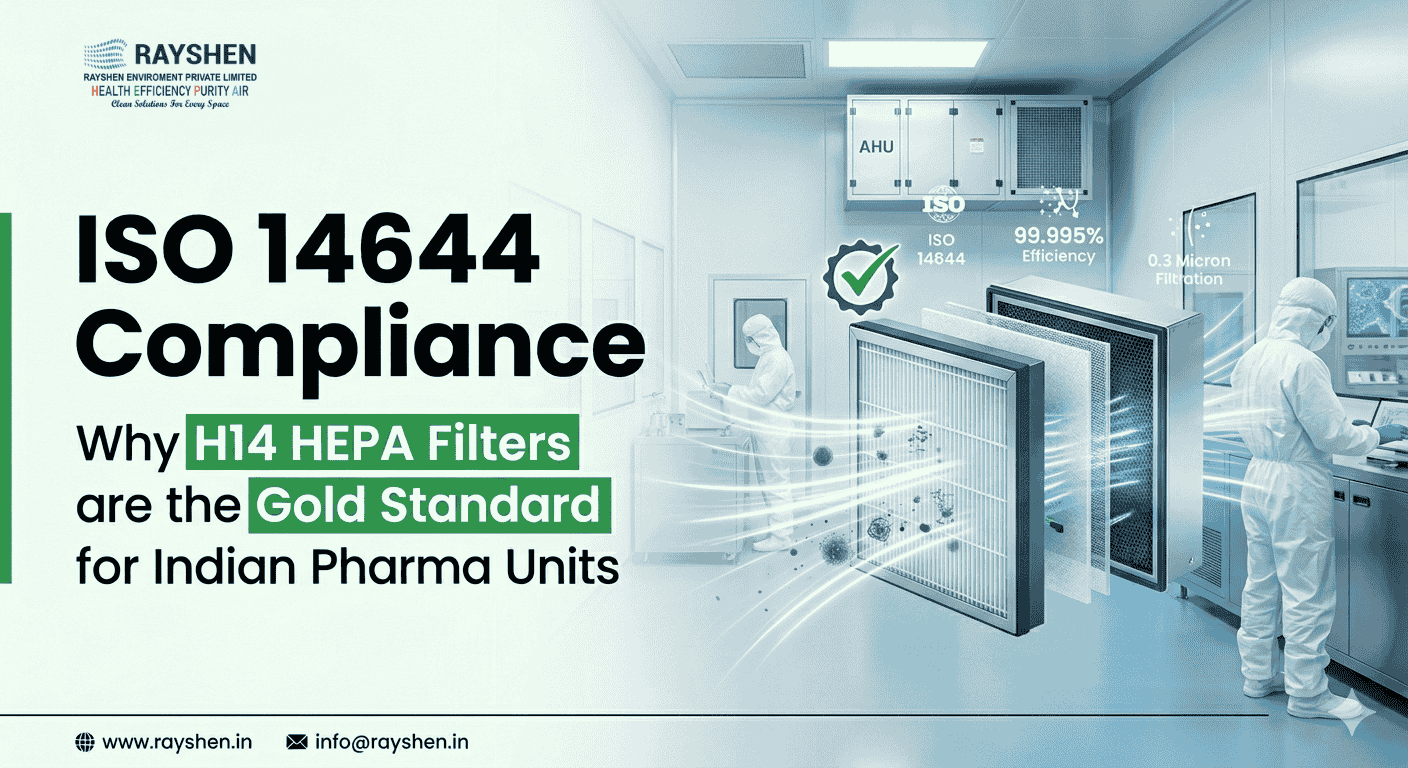
At the heart of this sterile revolution is the H14 HEPA Filter. While many filtration grades exist, the H14 has emerged as the definitive "Gold Standard" for achieving ISO 14644 compliance. In this guide, we explore the technical synergy between ISO standards and high-efficiency filtration, and why Rayshen’s cleanroom solutions are the preferred choice for India’s leading Pharma units.
1. Understanding ISO 14644 Standards in 2026
The ISO 14644 standard is the international benchmark for cleanroom classification. It dictates the maximum allowable concentration of particles per cubic meter of air.
The Classification Hierarchy
For a Pharmaceutical unit to operate, different zones require different ISO classes:
ISO 5 (Grade A): Filling zones, aseptic preparation, and high-risk areas.
ISO 7 (Grade B/C): Background zones for aseptic preparation.
ISO 8 (Grade D): Less critical stages like component washing.
To achieve an ISO 5 environment, the air filtration system must be capable of near-total particle removal. This is where the distinction between H13 and H14 HEPA filters becomes a matter of compliance versus failure.
2. The Science of H14 HEPA Filters: Efficiency & Performance
A HEPA (High-Efficiency Particulate Air) filter is not a simple sieve. It is a dense mat of randomly arranged borosilicate glass fibers.
Why "H14" Matters
The "H" stands for HEPA under the European standard EN 1822.
H13 Filters: 99.95% Efficiency.
H14 Filters: 99.995% Efficiency.
While a 0.045% difference might seem negligible, in a sterile filling suite, that fraction represents thousands of potential contaminants (like bacteria or pyrogens) that could compromise a batch. Rayshen’s H14 HEPA filters are leak-tested to ensure they meet this stringent 99.995% threshold at the Most Penetrating Particle Size (MPPS).
3. Why Indian Pharma Prefers H14 for Global Export Compliance
India exports pharmaceuticals to over 200 countries. To maintain these export licenses, Indian manufacturing plants must mirror the standards of the destination countries.
Meeting USFDA and EU GMP Requirements
The USFDA’s "Guidance for Industry: Sterile Drug Products Produced by Aseptic Processing" specifically emphasizes the need for high-efficiency filtration in critical areas. By installing H14 HEPA filters within Rayshen Fan Filter Units (FFU), Indian manufacturers can confidently pass international audits, ensuring their cleanroom integrity remains unshakeable.
4. Technical Integration: Beyond the Filter Media
An H14 filter is only as effective as its installation. To ensure ISO 14644 compliance, several technical factors must be addressed:
Laminar Air Flow (LAF) and Uniformity
In an ISO 5 zone, air must move in a unidirectional (laminar) flow to "sweep" particles away from the product. H14 filters used in Rayshen’s LAF units are designed with optimized pleat geometry to ensure uniform face velocity, typically maintained at 0.45 m/s (90 fpm) ± 20%.
Pressure Drop and Energy ROI
One common concern for HVAC consultants
is "Pressure Drop." A high initial resistance forces the AHU (Air Handling Unit) to work harder, increasing electricity costs. Rayshen’s Mini-Pleat HEPA technology offers a high surface area, which results in:
Lower initial resistance.
Longer filter life (2–4 years with proper pre-filtration).
Significant reduction in the facility's carbon footprint.
5. The Critical Role of Integrity Testing (DOP/PAO Testing)
Under ISO 14644-3, cleanrooms must undergo periodic "Integrity Testing." This involves introducing a challenge aerosol (like Dispersed Oil Particulate) upstream of the filter and scanning the downstream face for leaks.
Why Rayshen ensures 100% Factory Testing: Every H14 filter leaving our facility undergoes a rigorous scan test. We provide a Validation Certificate that simplifies the job for your Quality Assurance (QA) team during annual cleanroom re-certification.
6. Internal Linking: Building a Contamination-Free Ecosystem
To achieve total compliance, the filter must work in harmony with the rest of the cleanroom infrastructure.
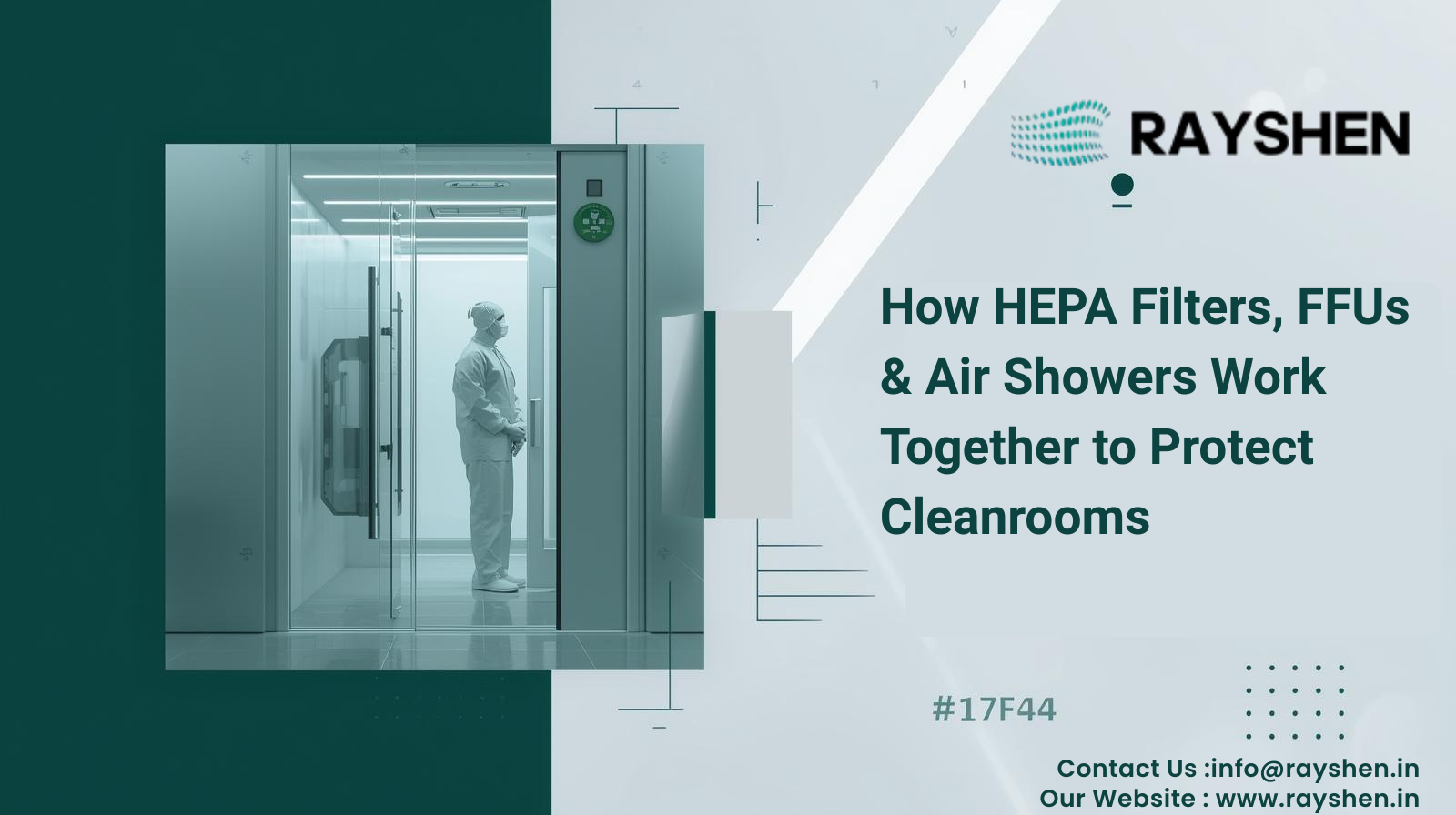
Air Showers: To prevent personnel-borne contaminants from entering the HEPA-filtered zone.
Pass Boxes: Ensuring material transfer does not disrupt the pressure gradients maintained by the HEPA system.
Modular Wall Panels: Providing the airtight envelope necessary for the HEPA filters to maintain positive pressure.
7. Frequently Asked Questions (FAQs)
Q1: Can an H13 filter be used for ISO 5 compliance?
Generally, no. For Grade A/ISO 5 aseptic zones, H14 is the industry standard. H13 is more suited for Grade C/D areas or as a high-efficiency secondary filter before the terminal H14 stage.
Q2: How often should H14 HEPA filters be replaced in a Pharma plant?
While the physical filter may last 3-5 years, the replacement is usually governed by the "Pressure Drop" (when it reaches twice its initial resistance) or a failed integrity test.
Q3: Does Rayshen provide custom-sized HEPA filters?
Yes. As a direct manufacturer, we provide custom-dimension H14 HEPA filters to fit legacy HVAC systems or specialized pharmaceutical machinery.
Q4: What is the benefit of Gel-Seal vs. Gasket-Seal HEPA filters?
Gel-seal filters offer a superior, leak-proof airtight connection, making them the preferred choice for high-end Pharma units where gasket bypass is a risk.
Conclusion: The Rayshen Advantage in Air Filtration
In the competitive Indian Pharma market, ISO 14644 compliance is your ticket to global growth. Choosing H14 HEPA filters is not just a technical decision—it is a commitment to patient safety and product quality.
As a specialist cleanroom equipment manufacturer, Rayshen provides the engineering expertise, high-quality components, and validation support required to transform your facility into a world-class production hub.
.png)
.png)