Static vs Dynamic Pass Box: Which One Does Your Cleanroom Need?
09-09-2026
If you run a pharmaceutical plant, a hospital sterile store, a semiconductor fab, or any facility that depends on a controlled environment, you already know that every item entering your cleanroom is a contamination risk. This is exactly the problem a cleanroom pass box is built to solve. But not all pass boxes are the same — and choosing between a static pass box and a dynamic pass box can significantly affect your contamination control, compliance, and long-term operating cost.
In this guide, Rayshen Environmental — a direct manufacturer of cleanroom pass boxes and contamination control equipment — breaks down exactly how static and dynamic pass boxes differ, which industries need which type, and how to choose the right specification (SS 304 vs SS 316, mechanical vs electromagnetic interlock) for your facility.
What Is a Cleanroom Pass Box?
A pass box, also called a pass-through box or pass-through chamber, is an enclosed transfer unit with two interlocked doors on opposite sides. It is installed directly into a cleanroom wall and allows materials, components, tools, and documents to move between a clean area and a non-clean area (or between two cleanroom zones of different classifications) without opening the room itself to outside air.
The core purpose of a pass box is simple: reduce door openings, reduce personnel movement, and reduce the number of times outside air or particulate matter gets a chance to enter your controlled environment.
How a Pass Box Works (Interlocking Mechanism)
Every pass box — static or dynamic — relies on an interlocking mechanism that physically prevents both doors from opening at the same time. When one door is open, the opposite door remains locked. This single design feature is what stops a direct air path from forming between the clean zone and the outside environment, which would otherwise defeat the purpose of the cleanroom entirely.
Interlocks are available in two main types:
Mechanical interlock: A simple pin-and-lever system. Reliable, low-cost, and commonly used in lower-risk applications.
Electromagnetic interlock: Uses sensors and an electronic locking system, often paired with an indicator light showing which door is safe to open. An electromagnetic interlock static pass box is the preferred choice for GMP-regulated pharmaceutical manufacturing, where interlock failure has to be logged, tested, and validated as part of routine quality checks.
What Is a Static Pass Box?
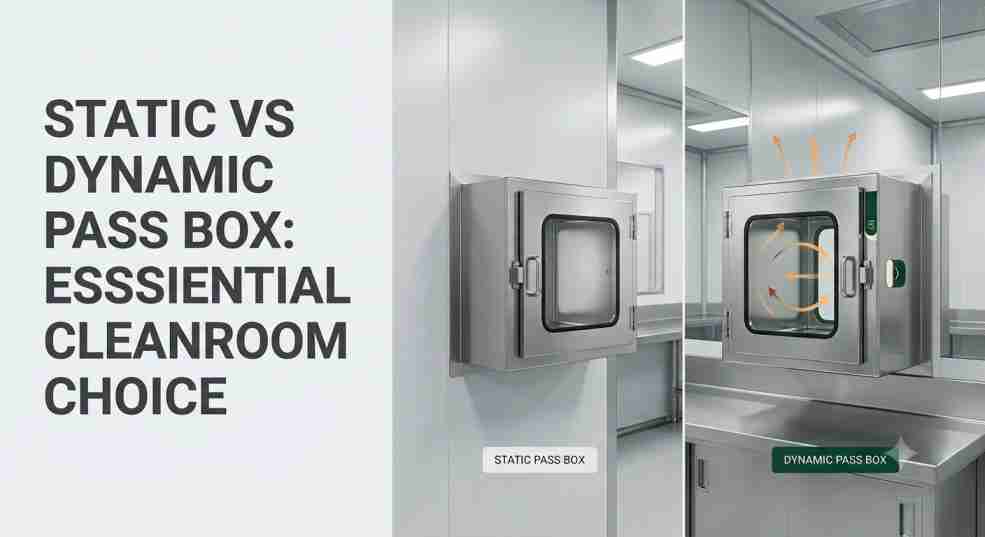
A static pass box is the simpler of the two designs. It has no fan, no filtration system, and no active air movement. It relies purely on the interlocking door mechanism and a well-sealed enclosure to prevent cross-contamination during transfer.
Key Features of a Static Pass Box
No moving air components — lower maintenance and lower long-term running cost
SS 304 or SS 316 grade stainless steel body with a smooth, coved, easy-to-clean interior
Mechanical or electromagnetic interlock options
UV lamp option available for basic surface disinfection during the transfer cycle
Compact footprint, easy to retrofit into an existing cleanroom wall
Electromagnetic Interlock Static Pass Box Explained
For facilities operating under GMP or ISO 14644 requirements, a basic mechanical pin lock is often not enough. An electromagnetic interlock static pass box replaces the manual pin with a solenoid-based locking system tied to door sensors. This gives you:
Audit-traceable interlock operation (useful during IQ/OQ/PQ validation)
Visual/audio indicators showing lock status
Optional integration with access control or BMS systems
Reduced risk of operator error compared to manual interlocks
This makes the electromagnetic version the standard choice for pharmaceutical manufacturing, hospital CSSD departments, and any facility preparing for a regulatory audit.
Applications of Static Pass Box
Transferring documents, small tools, and components into ISO Class 7–8 cleanrooms
Hospital operation theatres and CSSD (Central Sterile Supply Department)
Electronics and precision assembly units where airflow control isn't critical
Low-to-medium risk pharmaceutical secondary packaging areas
What Is a Dynamic Pass Box?
A dynamic pass box takes the same interlocked-chamber concept and adds active air filtration. Inside the chamber, a fan draws air through a HEPA (or in some cases ULPA) filter before it reaches the transfer zone, continuously flushing out particulate contamination during the transfer cycle rather than just relying on a sealed enclosure.
How Dynamic (HEPA) Pass Boxes Maintain Air Cleanliness
When the outer door is opened to place an item inside, dynamic pass boxes immediately begin filtering the internal air. A built-in HEPA filter — typically H13 or H14 grade — removes airborne particles down to 0.3 microns before the inner door is permitted to open. This "self-purging" cycle is what makes a dynamic pass box suitable for higher cleanliness classifications where a static, sealed box alone wouldn't provide enough contamination control.
Key components typically include:
HEPA/ULPA filtration stage
Blower/fan unit with adjustable airflow
Digital or analog timer controlling the purge cycle
Differential pressure gauge to monitor filter loading over time
UV Dynamic Pass Box Option
Many dynamic pass boxes are also available with a UV-C germicidal lamp fitted inside the chamber. While HEPA filtration removes particulate contamination, UV-C is added specifically to reduce microbial/biological contamination on the surface of transferred items — a combination frequently specified in sterile pharmaceutical manufacturing and biotechnology cleanrooms.
Applications of Dynamic Pass Box
ISO Class 5–6 pharmaceutical aseptic manufacturing zones
Biotechnology and vaccine production facilities
Semiconductor cleanrooms transferring wafers or sensitive components
Any GMP Grade A/B area requiring documented air cleanliness during material transfer
Static vs Dynamic Pass Box: Key Differences
| Feature | Static Pass Box | Dynamic Pass Box |
| Air filtration | None | HEPA/ULPA filtered airflow |
| Best for cleanroom grade | ISO 7–8, GMP Grade C/D | ISO 5–6, GMP Grade A/B |
| Power requirement | Not required (unless UV fitted) | Required (fan + filter + controls) |
| Maintenance | Minimal — seal and interlock checks | Filter replacement, fan servicing, pressure monitoring |
| Typical cost | Lower upfront and running cost | Higher upfront cost due to filtration system |
| Interlock type | Mechanical or electromagnetic | Usually electromagnetic with timer control |
| Contamination control method | Sealed enclosure + interlock only | Sealed enclosure + interlock + active air purging |
SS 304 vs SS 316 Pass Box: Which Material Should You Choose?
Both static and dynamic pass boxes are commonly constructed in stainless steel, and the grade you choose matters more than most buyers realize.
SS 304 Pass Box: Good general-purpose corrosion resistance, widely used across electronics, general pharmaceutical secondary areas, hospitals, and food processing. This is the most common and cost-effective specification for standard cleanroom applications.
SS 316 Pass Box: Contains molybdenum, giving it significantly higher resistance to chemical corrosion, chlorides, and repeated sanitization with aggressive cleaning agents.
Pharmaceutical Static Pass Box SS 316 – When It's Required
A pharmaceutical static pass box in SS 316 is typically specified when the pass box will be exposed to frequent fumigation, harsh disinfectants, or corrosive chemical vapors — common in aseptic filling areas, sterile injectable manufacturing, and API (Active Pharmaceutical Ingredient) handling zones. If your facility undergoes frequent hydrogen peroxide vapor (VHP) decontamination cycles or uses strong chlorine-based sanitizers, SS 316 is the safer long-term investment, even though it carries a higher upfront cost than SS 304.
How to Choose the Right Pass Box for Your Cleanroom
Cleanroom Grade & ISO Classification
Start with your target cleanroom classification. If you're operating an ISO Class 5 or GMP Grade A/B zone, a dynamic HEPA pass box isn't optional — most regulatory bodies and internal quality systems will expect active filtration at that level. For ISO Class 7–8 or Grade C/D areas, a well-sealed static pass box with a reliable interlock is usually sufficient.
Frequency of Material Transfer
High-frequency transfer points (production floors moving components constantly) benefit from dynamic pass boxes with shorter, automated purge cycles to avoid becoming a bottleneck. Low-frequency transfer points (occasional document or tool transfer) rarely justify the added cost and maintenance of a dynamic system.
Budget & Static Pass Box for Cleanroom Price Factors
Static pass box for cleanroom price depends primarily on:
Body dimensions and stainless steel grade (SS 304 vs SS 316)
Interlock type (mechanical vs electromagnetic)
UV lamp addition (optional)
Customization — flush mounting, viewing window, tray configuration
Dynamic pass boxes cost more upfront due to the fan, filter housing, and control panel, but this needs to be weighed against the compliance risk of operating a filtered zone without validated air handling at the transfer point.
Why Choose Rayshen as Your Pass Box Manufacturer
Static Pass Box Manufacturer in India – Direct Manufacturer Advantage
As a direct pass box manufacturer in India, Rayshen Environmental designs, fabricates, and tests every pass box in-house — not through a trading or reselling arrangement. This means:
Full customization of size, interlock type, and material grade to your exact layout
Direct factory pricing with no middleman markup
Faster turnaround on custom SS 316 or electromagnetic interlock configurations
Direct technical support for installation and validation queries
Validation & Compliance Support (IQ/OQ/PQ, ISO 14644, GMP)
Every Rayshen pass box — static or dynamic — is built to align with ISO 14644 cleanroom standards and GMP requirements, with documentation support for IQ (Installation Qualification), OQ (Operational Qualification), and PQ (Performance Qualification) as part of your facility's overall cleanroom validation package. For dynamic pass boxes, this includes HEPA filter DOP/PAO integrity testing to confirm filtration efficiency before commissioning.
Frequently Asked Questions (FAQs)
1. What is the main difference between a static and dynamic pass box?
A static pass box relies only on a sealed enclosure and door interlock, while a dynamic pass box adds active HEPA-filtered airflow to actively purge contamination during transfer.2. Which pass box is required for GMP Grade A/B cleanrooms?
A dynamic (HEPA-filtered) pass box is generally required for GMP Grade A/B and ISO Class 5–6 areas, as static units don't provide active air cleanliness control.3. Is SS 316 necessary for every pharmaceutical pass box?
No. SS 316 is recommended specifically for areas with frequent chemical fumigation or aggressive sanitization; standard SS 304 is suitable for most general pharmaceutical and cleanroom applications.4. What is an electromagnetic interlock static pass box?
It's a static pass box where the manual pin interlock is replaced with a sensor-based electromagnetic locking system, offering audit-traceable operation for GMP compliance.5. Does the static pass box for cleanroom price include installation?
Pricing varies by manufacturer and typically covers the unit itself; installation, validation documentation, and customization can affect the final quoted price — always confirm scope directly with your pass box manufacturer.Conclusion
Choosing between a static and dynamic pass box comes down to one question: does your cleanroom grade require active air filtration at the transfer point, or is a sealed, interlocked chamber enough? Lower-grade cleanrooms (ISO 7–8, Grade C/D) are well served by a reliable static pass box, ideally with an electromagnetic interlock for audit traceability. Higher-grade sterile and aseptic zones (ISO 5–6, Grade A/B) need the added protection of a dynamic, HEPA-filtered pass box.
As a direct manufacturer, Rayshen Environmental builds both static and dynamic pass boxes in SS 304 and SS 316, with mechanical or electromagnetic interlocks, customized to your cleanroom's exact classification and layout — backed by full IQ/OQ/PQ validation support.
Looking for a Static Pass Box Manufacturer in India? Contact Rayshen for a custom quotation, or explore our Static Pass Box range directly.
.png)
.png)