Air Shower vs. Pass Box: What's the Difference and When Do You Need Each?
.png)
13-07-2026
Every cleanroom needs a way to move people and materials in and out without compromising contamination control — but personnel and product require different equipment to do it safely. Two of the most commonly confused pieces of cleanroom equipment are the air shower and the pass box. Both control contamination at transfer points, but they serve entirely different purposes and are not interchangeable.
At Rayshen, we manufacture air showers, pass boxes, and complete cleanroom transfer systems for pharmaceutical, semiconductor, hospital, and industrial clients. This guide breaks down exactly what each system does, where they overlap, and how to decide which one — or both — your facility actually needs.
What Is an Air Shower?
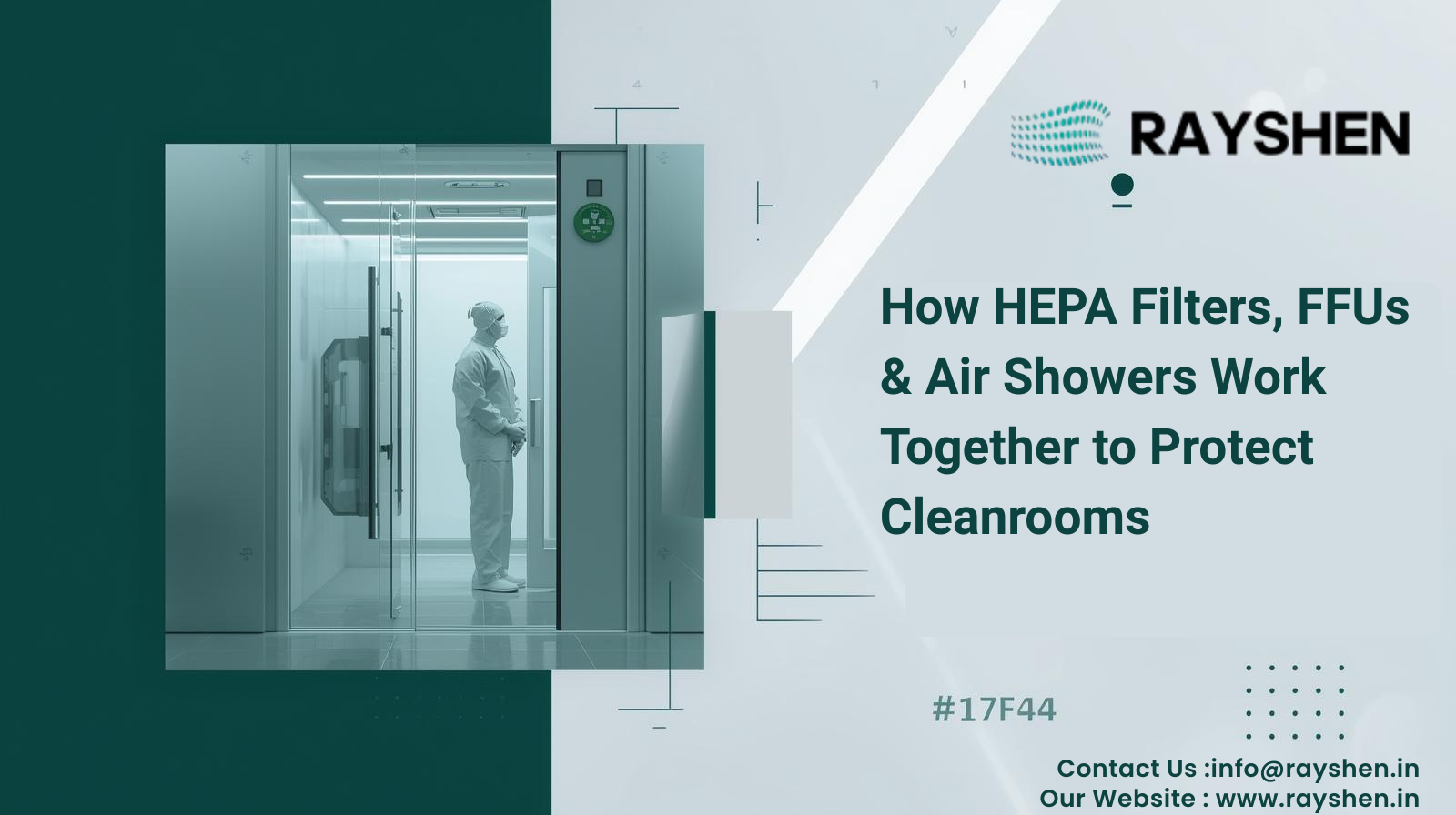
An air shower is a decontamination chamber that personnel (and sometimes equipment or trolleys) pass through before entering a cleanroom. High-velocity, HEPA-filtered air jets blast loose particles off garments, hair, and surfaces, removing contaminants that would otherwise be carried directly into the controlled environment.
How a Cleanroom Air Shower Works
A cleanroom air shower typically operates on an interlocked two-door system: the entry door and exit door cannot open simultaneously, preventing unfiltered corridor air from mixing with cleanroom air. Once inside the chamber, nozzles direct filtered air at the occupant for a set cycle time — commonly 15 to 30 seconds — before the interior door unlocks.
HEPA Filtered Air Shower Design
Every properly engineered air shower uses HEPA filtered air shower technology at its core. Air is drawn in, passed through a HEPA filter (typically H13 or H14 grade), and then accelerated through strategically angled nozzles to maximize particle removal from the widest possible body surface area.
What Is a Pass Box?
A pass box is a sealed transfer chamber used to move materials, tools, or components between two spaces — typically a non-cleanroom area and a cleanroom, or between two cleanroom zones of different classification — without requiring personnel to physically enter the cleanroom for the transfer.
Unlike an air shower, a pass box is designed for materials, not people. It has two interlocked doors on opposite sides, and in many configurations includes UV sterilization or HEPA-filtered air circulation to reduce contamination on the transferred items themselves.
Air Shower vs. Pass Box: Core Differences
| Feature | Air Shower | Pass Box |
| Primary purpose | Decontaminate personnel entering a cleanroom | Transfer materials between spaces |
| Who/what uses it | People (sometimes with equipment/carts) | Tools, components, documents, small equipment |
| Mechanism | High-velocity HEPA-filtered air jets | Sealed chamber, sometimes with UV or air filtration |
| Cycle time | 15–30 seconds typical | Varies; often manual or timed interlock |
| Typical placement | Cleanroom entry/gowning area | Between cleanroom and non-cleanroom, or between cleanroom zones |
The key distinction is simple: air showers decontaminate people, pass boxes decontaminate the transfer of materials. Most cleanroom facilities need both, positioned at different points in the facility layout.
When You Need an Air Shower
An air shower becomes essential wherever personnel are entering a cleanroom directly from a less controlled environment, especially in facilities with:
ISO 5 compliant air shower requirements for critical process areas, where even minor particulate ingress can affect product quality
High personnel traffic between gowning rooms and production floors
Regulatory requirements mandating documented personnel decontamination procedures
Air Shower for Pharmaceutical Industry Applications
An air shower for pharmaceutical industry facilities is often a regulatory expectation rather than an optional upgrade, particularly for aseptic filling lines, sterile compounding areas, and biologics production. Pharmaceutical auditors frequently check for documented air shower cycle validation as part of GMP compliance reviews.
Entry Air Shower System Placement
An entry air shower system is typically installed directly between the gowning room and the cleanroom production floor, ensuring personnel pass through decontamination immediately before entering the controlled space — not several steps removed from it, which would allow re-contamination in between.
When You Need a Pass Box
A pass box is the right equipment choice when the goal is moving materials — not people — across a contamination boundary. Common scenarios include:
Passing raw materials, components, or tools into a cleanroom without a full personnel entry cycle
Transferring samples out of a cleanroom for testing without breaching containment
Moving items between cleanroom zones of different ISO classifications
Pass boxes are far more space- and time-efficient for material transfer than requiring gowned personnel to carry items through a full air shower cycle every time.
Automatic Air Shower Tunnel: For High-Traffic Facilities
Facilities with large personnel volumes — such as semiconductor fabs or large-scale pharmaceutical plants — often move beyond single-person chambers to an automatic air shower tunnel. These tunnel-style systems allow multiple people to pass through in sequence with automated door interlocks and sensor-triggered cycles, significantly improving throughput during shift changes without compromising decontamination effectiveness.
Double Door Air Shower Configurations
A double door air shower refers to units with entry and exit doors on opposite sides of the chamber, allowing one-directional personnel flow rather than requiring users to exit through the same door they entered. This configuration:
Prevents cross-traffic congestion during shift changes
Supports a clear, one-way gowning-to-cleanroom workflow
Reduces the risk of contaminated and clean personnel paths crossing
Single-door units, by contrast, are more compact and suit lower-traffic facilities where space is limited.
Stainless Steel Air Shower for Hygiene-Critical Environments
For pharmaceutical, biotech, and food-grade cleanroom applications, a stainless steel air shower is generally the preferred construction material over powder-coated steel. Stainless steel offers:
Resistance to corrosion from cleaning agents and disinfectants
Easier surface validation for GMP-regulated facilities
Better long-term durability under frequent wash-down cycles
Facilities operating under strict hygiene audits should specify stainless steel construction upfront rather than retrofitting later, since surface material is difficult to change after installation.
Surgical Air Shower Price: What Affects the Cost
Facilities researching surgical air shower price points should understand that cost varies significantly based on several factors:
Chamber size and personnel throughput capacity (single-person vs. tunnel configurations)
Construction material (powder-coated steel vs. stainless steel)
HEPA filter grade (H13 vs. H14) and filtration area
Control system sophistication (basic timer interlocks vs. sensor-automated cycles)
Customization requirements, including double-door configurations or integration with existing gowning room layouts
Rather than comparing price alone, facilities should request quotes that specify filtration grade, cycle validation documentation, and construction material — since units at similar price points can vary considerably in long-term performance and compliance suitability.
Choosing an Air Shower Manufacturer in India
Selecting the right air shower manufacturer in India matters as much as the equipment specification itself. Key evaluation points include:
Direct manufacturing capability: Does the company build air showers and pass boxes in-house, or resell third-party units?
Customization: Can they produce stainless steel, double-door, or tunnel configurations to match your facility layout?
Compliance documentation: Do they provide HEPA filter test certificates and cycle validation support for regulatory audits?
Industry experience: Have they supplied pharmaceutical, semiconductor, or hospital clients with similar classification requirements?
After-sales support: Availability of spare parts, nozzle replacements, and control system servicing over the equipment's operating life
As a direct manufacturer, Rayshen produces air showers and pass boxes in standard and custom configurations — including stainless steel, double-door, and automatic tunnel systems — for pharmaceutical, semiconductor, and industrial clients.
Conclusion
Air showers and pass boxes solve two different contamination control problems, and confusing one for the other can leave a genuine gap in a facility's cleanroom protocol. An air shower decontaminates the people entering your controlled environment; a pass box decontaminates the materials moving through it. Most ISO-classified cleanrooms need both, positioned correctly within the facility layout to maintain a consistent contamination control barrier.
As a manufacturer of air showers, pass boxes, HEPA filters, and complete cleanroom equipment, Rayshen supports pharmaceutical, semiconductor, hospital, and industrial clients with standard and custom-engineered transfer solutions built to ISO-certified standards.
.png)
.png)